
Is 2026 the Year for AI in Hurricane Forecasting?


AI is not the story of the 2026 hurricane season, and it was not the story in 2025 either. However, the technology is real and the results are improving fast. Plus, every major forecasting center is now testing AI. My experience with AI and hurricane forecasting tells me AI will become a primary tool in hurricane forecasting next year or in 2028, but not now. Here’s why.
The AI Trend Is Real
Like other applications of AI, weather models have moved from research curiosity to actively using AI in just a few years. Google DeepMind's Weather Lab, which I added to my Top 6 list this year, is the most visible example. DeepMind's AI model runs at roughly 0.3% of the computational cost of a traditional forecast and can generate a thousand possible storm paths instead of the usual fifty.
NOAA has been building and testing AI versions of its own forecast models alongside the models themselves. 2025 was the first hurricane season the National Hurricane Center formally tested AI guidance alongside its traditional tools. The investment has been aggressive since.
That AI trend is up and to the right; however, that is not the same as an established track record. Hurricane forecasting is not the place to confuse the two.
How Forecasters Get It Right Today
Today, most of the hurricane forecasting heavy lifting comes from physics-based models. Real observations, gathered by hurricane hunter aircraft and satellites, feed a supercomputer that simulates how the atmosphere will actually move and change.
A second, smaller set of models leans on history rather than physics, essentially asking how storms with similar traits have behaved in the past. NHC then blends all of that guidance. A meteorologist applies judgment on top.
NOAA NHC hurricane forecasts do a good job of predicting landfall locations and windspeed within 48 hours of landfall.
NHC's official forecast beats every individual model that feeds it, because a person is doing the blending. Built on decades of refinement, that human-plus-physics combination is the world my Top 6 hurricane sites are built around.
What AI Actually Adds
The natural question is whether AI is helping because it works with better data or because it computes faster. Right now, it is overwhelmingly about speed.
AI models do not need more detailed data than physics-based models. Based on what I have seen, they hold up fine on coarser data. What they need far less of is computing power.
The forecast that once took hours on a supercomputer now runs in minutes. That speed is what allows a thousand-storm-path ensemble instead of fifty. A bigger ensemble is a better picture of what's uncertain, not proof the uncertainty is gone.
AI is not out-sensing or out-observing the traditional models; it is making the existing forecasting pipeline dramatically cheaper to run at scale.
Accuracy is uneven and depends heavily on the history a given model was trained on. Some AI models track storms well but forecast intensity poorly, or the reverse. They recognize patterns from the past, so they struggle with storms unlike anything in their training data. A University of Chicago study made the point directly: researchers trained a model on data with no major hurricanes, then asked it to forecast one. It failed.

That is not only a data problem. People have the same blind spot. We tend to overweight the rare events we can picture and underestimate the ones we can't, which is exactly why the storms nobody saw coming are the ones that do the most damage – to a training set or to a coastline.
What It Means for You This Season
Within the seven-day window that determines whether you batten down the hatches or evacuate, stick with NHC's official forecast and the consensus-based sources on my Top 6 list, not any single model, AI included.
It also helps to know what the AI-versus-traditional race is actually about. Both sides are chasing better track and intensity forecasts, and within about 48 hours of landfall, the existing models already do that job well.

The forecast problem that still kills the most people is different: rainfall and inland flooding, which neither the traditional models nor the AI challengers have solved. A storm can be forecast almost perfectly and still be devastating for reasons the cone never showed. A hurricane is rarely one event anyway – it's wind, then surge, then the inland flooding that does its damage days later and hundreds of miles from the coast.
For the Real World (As A Practitioner)
In my consulting work, clients responsible for critical infrastructure increasingly ask whether an AI forecast is good enough to plan around. I think my answer is the one a meteorologist would give: not yet, and not alone.
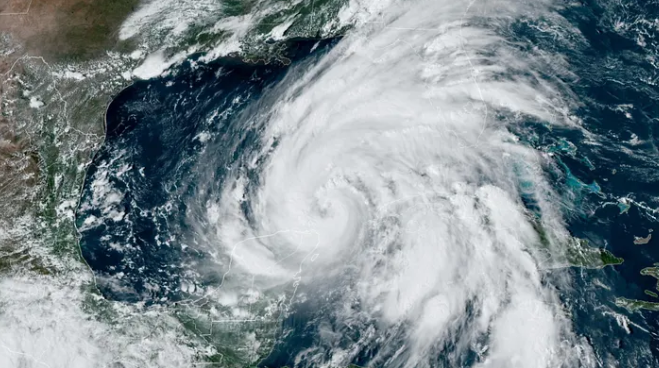
Right now, AI's value is mostly behind the scenes. It gives NHC forecasters another independent viewpoint and generates larger, cheaper ensembles for research. It has not yet earned a seat at the table for frontline operations decisions that actually matter, like when to shut down your facility, when to secure safe temporary housing for your essential O&M staff, or when to order a tanker of backup fuel for your emergency generators.
The Future of AI Hurricane Forecasting
AI's role in hurricane forecasting will continue to grow. But 2026 is another year of testing and refinement, not a changing of the guard. Judgment compounds as models grow, just as it does for human forecasters.
My money is on 2027 or 2028 before AI carries significant weight as a stand-alone. But even then, the primary order of business will not be trusting an AI-based tool but rather when to use it or not. Until AI judgment is built and proven, when a storm is within a week of landfall, trust the forecast that already has a person's judgment behind it.
JD Solomon writes and consults on decision-making, reliability, risk, and communication for leaders and technical professionals. His work connects technical disciplines with human understanding to help people make better decisions and build stronger systems. Learn more at www.jdsolomonsolutions.com and www.communicatingwithfinesse.com.


Comments