
Human Performance: Don’t Stop Your Root Cause Analysis Too Soon

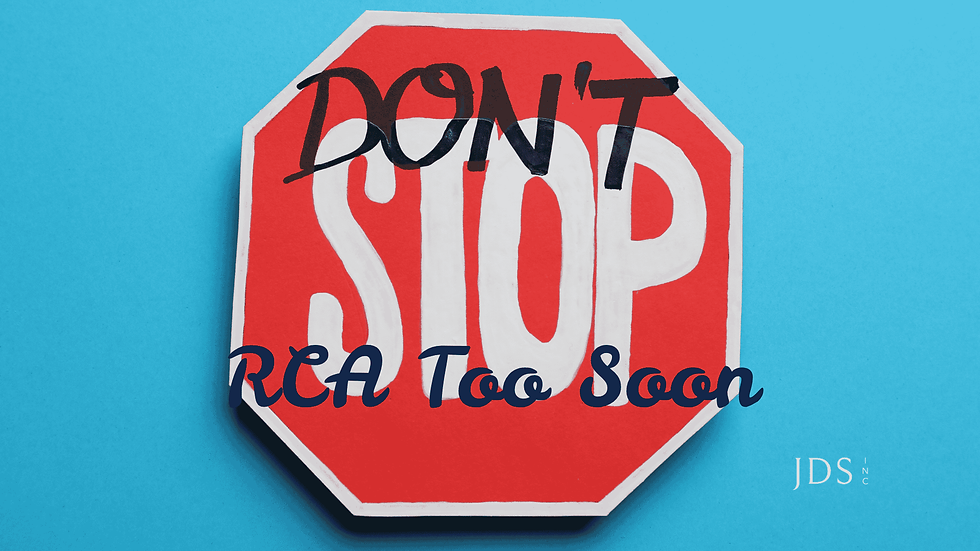
Root cause analysis loses its value the minute we settle for surface-level explanations like ‘human error,” “inadequate training,” or “poor communication.” These labels feel comfortable yet rarely reflect the real causes. Getting to the root causes and meaningful improvement begins only when we push past the easy answers and examine the systems and decisions that shape front-line performance.
The real cause is usually one question past where most RCAs stop.
From the Real World
I was working with an engineering director to help his team develop a new approach to root cause analysis. He invited me to sit in on one so I could form an opinion of what they were doing.
The format was fine. What concerned me was how casually the team stopped digging once they reached human factors. I also knew the director was proud of, and sensitive about, his current program.
At the end of the debrief, I asked one more question anyway. “Does ‘inadequate training’ really get to the heart of the matter?”
“Sure,” Rick said. “Our training budgets have never been adequate, and they’ve been cut hard this past year.”
“I see that a lot,” I said. “But why is it inadequate? Or why has it been cut?”
“Good questions,” Rick admitted. “It’s sort of always been that way, but it’s gotten worse under the new HR director. She’s not meshing well with some of us on the management team.”
“That might be worth exploring in your RCA and your mitigation strategies,” I said, and let it go.
Six Ways Root Cause Analysis Gets Cut Short
RCAs stall before reaching the root cause in roughly half a dozen predictable places:
Inadequate equipment failure analysis
Poor design
Human error
Procedure not followed
Inadequate training
Poor communication
The last four deserve the closest attention. They are the categories RCA teams and facilitators reach for when they want to close a case; however, they are not the ones that explain what actually happened. Generalization (lower resolution) confuses the issue instead of clarifying it.
People generalize when the evaluation turns toward management-related issues.
Human Error Is a Verdict, Not a Cause
“Human error” is a subjective judgment that’s always made in hindsight. It points a finger at the individual and ignores the work process around them. The line between “human error” and “heroic action” is often just the outcome. People generally want good results. That’s exactly why a facilitator has to focus on the process, not the person, and manage by work process rather than by blame.
According to Mark Galley, a blame approach looks like this:
Looks for “the cause,” meaning a person or group
Asks “who did it?”
Focuses on the individual who failed
Uses top-down problem solving
Ignores the work process
A systems approach looks different:
Looks for causes within the system
Asks “why did it happen?”
Focuses on the task that broke down
Moves problem solving closer to the work
Manages by work process
Organizations that manage by process accept that everyone is fallible and still achieve high reliability. That acceptance is a defining trait of a high-reliability organization.
Brian Hughes, co-founder of Sologic, describes the same instinct to stop too soon. “Often we stop investigating once an error is found,” he writes. “This is a mistake.”
He calls his alternative the “Cause +2” strategy: look at least two levels of causes beyond the error itself, because “an error should not be the end of the investigation, but the beginning.”
“Often we stop investigating once an error is found. This is a mistake.” – Brian Hughes.
Procedure Not Followed Is a Starting Point, Not an Ending
Facilitators often treat “procedure not followed” as a stopping point. It should be a starting point. Asking “why wasn’t the procedure followed” invites a shrug: “I don’t know,” or worse, “I don’t remember,” because the question is too broad and nobody wants to incriminate themselves.
Better questions are specific:
Which work process wasn’t followed?
Which step within it broke down?
Which part of that step?
What was the person actually seeing or doing at that moment?
Walk through the details of that process once you have real answers, and map out the specific steps.
Training Doesn’t Explain What Failed
“Inadequate training” tells you nothing about which knowledge was missing, which step was misunderstood, or which condition prevented correct performance. Concluding that training is the root cause leads to one flat solution: retrain people. That rarely touches the underlying system, and it hides the real causal factors, things like unclear instructions, incorrect assumptions, missing evidence, or conflicting priorities.
Bob Latino has made this point for years. In The ‘Soft Side’ of RCA: Management’s Role in ‘Effective’ Training, he argues that “training alone is not the panacea to a facility’s problems,” and describes how companies use training as “managerial therapy.” They send a person or group to a class and assume the need is satisfied. As Latino puts it, “the training investment turns out to be a waste of money” when it substitutes for real causal analysis.
Training alone is not the panacea to a facility’s problems. – Bob Latino
Communication Is a Process, Not a Cause
Saying “poor communication” describes what happened, not why it happened. It doesn’t tell you which message, which detail, or which assumption broke down. Mark Galley puts it plainly, “Communication is not a cause. It’s a process.” Every communication failure traces back to specific causes like missing information, ambiguous wording, flawed assumptions, incorrect timing, or inadequate verification.
Communication is not a cause. It’s a process. – Mark Galley
Latino raises the same flag from a different angle. In What Are the Root Causes of Ineffective Communication?, he argues the term has become so generic it’s meaningless for corrective action, and asks the question that matters: “How can we act on ‘poor communications’ without understanding what causes such miscommunication?”
Stopping at “communication” costs an organization more than a neat finding. It costs clarity about the actual mechanism of failure, solutions that change the system, and the chance to learn how information flows.
From the Real World (Part 2) - Bill Isn’t the Problem
“Why?” an assistant department manager replied when I pushed during a different engagement. “Because communication is always part of the problem. That’s true everywhere I’ve ever worked.”
“But in this case,” I asked, “why was it poor communication?”
“Because Bill’s a poor communicator.” Everyone laughed, including Bill.
“Let’s sit with that,” I said. “If Bill is such a bad communicator, why do we let him be the bottleneck for the process?”
“That’s just how we do it. Whoever assigns the work explains what’s needed, and everybody does it a little differently,” the manager said. “Part of the problem is some people don’t know what to do even when it’s explained correctly.”
“Everybody,” the engineering director interjected, “one thing JD is going to bring is more attention to the places we’ve been stopping, like communication and training.”
I smiled.
Don’t Stop RCA Prematurely
Stopping at human error, or procedure not followed, or training, or communication hides the deeper organizational factors that actually drive failure. Mid- and senior-level professionals have to insist on specificity and evidence if we want lasting system improvement. The organizations that succeed look past the symptoms and address the causes embedded in their management systems.
Where does your last RCA stop, and is that really the root?
References
Galley, M. (n.d.). The Root: Root cause analysis blog. ThinkReliability. https://blog.thinkreliability.com/author/mark-galley
Hughes, B. (2021, February 1). Encouraging employees to own up to mistakes at work and how to minimise future problems. Training Journal. https://www.trainingjournal.com/2021/business-and-industry/encouraging-employees-own-mistakes-work-and-how-minimise-future-problems/
Latino, R. J. (2020, March 20). The ‘soft side’ of RCA: Management’s role in ‘effective’ training. Reliability. https://reliability.com/root-cause-analysis/the-soft-side-of-rca-managements-role-in-effective-training/
Latino, R. J. (2021, April 22). What are the root causes of ineffective communication? A healthcare case study. Accendo Reliability. https://accendoreliability.com/root-causes-ineffective-communication-healthcare-case-study/
Need help getting started? JD Solomon Inc. provides practical solutions to align problem-solving, root cause analysis, and executive communication at the nexus of facilities, infrastructure, and the environment.
JD Solomon is the founder of JD Solomon, Inc., the creator of the FINESSE Fishbone Diagram®, and the co-creator of the SOAP criticality method©. He is the author of Communicating Reliability, Risk & Resiliency to Decision Makers: How to Get Your Boss’s Boss to Understand and Facilitating with FINESSE: A Guide to Successful Business Solutions.




Comments