
Dependability and Reliability: Lessons from the Surf


In a recent article, I used surf fishing to illustrate the difference between common-cause failures and single points of failure. I concluded that the rod-and-reel asset was not the dominant source of dependability. Most failures occurred downstream in hooks, swivels, knots, and pre-tied rig components.
A companion question is why I prefer buying Penn Fierce reels when lighter, smoother, and more expensive alternatives are available. The answer has less to do with reliability than many people might assume and more to do with dependability.
Defining the Asset
For this discussion, I view the rod and reel as a single asset.
In my experience, this assumption is completely normal from an asset-management perspective. We routinely evaluate pump-motor assemblies, actuator-valve combinations, and generator-engine packages as single functional assets because they perform a single mission. The same logic applies here.
I do not separate or interchange the rods and reels unless there is a major failure. I do preventative maintenance on both at the same time. More importantly, the rod and reel work together to perform a single function. Evaluating one without the other provides little practical value.
Once the asset boundary is defined (framed), we can examine it through three lenses: reliability, availability, and dependability.
Reliability: Will It Break?
Reliability is the concept most engineers learn first. It focuses on the probability that an asset will perform its intended function for a specified period under stated conditions.
For fishing equipment, reliability is largely a design question.
Is the reel fundamentally sound?
Are the gears robust?
Will the drag system perform appropriately?
Can the rod withstand expected loads?
Reliability is primarily determined long before I walk onto the beach. It is influenced by design decisions, manufacturing quality, material selection, and testing. This is a big reason many maintenance organizations often overestimate their influence on reliability. Maintenance can restore an asset to its intended condition. It cannot transform a poor design into a good one.
The Penn Fierce platform has earned a reputation for reliability because its basic design suits the operating environment. It may not be the lightest or the most refined reel on the market. However, its design has proven consistently capable of surviving surf-fishing conditions. And that is fundamentally a reliability discussion.
Availability: Is It Ready to Fish?
Availability focuses on whether the asset performs its intended function at a given moment. The concept incorporates maintenance activities, repair time, spare parts, and administrative delays.
A reel can be highly reliable but unavailable because it is awaiting repair. Conversely, a reel can be relatively unreliable but highly available if repairs are quick and simple.
Availability is tremendously useful when evaluating continuously operating systems. Water treatment plants, power systems, manufacturing operations, and critical infrastructure often depend upon high availability.
For my surf-fishing application, however, availability matters less. Temporary downtime has little effect on my overall mission.
I am not fishing twenty-four hours a day.
I am not operating a continuous industrial process.
If a reel needs cleaning, lubrication, or minor repair, I can perform that work between trips.
Availability matters, but it is not usually the primary consideration for me and my surf fishing context.
Dependability: Will It Complete the Mission?
Dependability focuses on whether an asset can be trusted to perform when the mission matters.
This is where the discussion becomes more practical. Dependability is often underrepresented in formal reliability discussions, yet it is often what operators and executive management care about most.
Dependability feels different from reliability and availability. It does not have complex calculations (Igor Bazovsky’s equation is simple) or a slew of maintenance metrics. We can put some math on it, but dependability is focused on confidence.
When I load my fishing cart before daylight, walk to the beach, and spend several hours in the surf, I do not think about failure rates or availability calculations. Actually, I am not thinking about much and don’t have to. I know the equipment will do its job.
My confidence comes from accumulated experience. Dependable equipment, of all classes and types, develops a reputation. Owners and operators trust it because it keeps performing under real-world conditions.
That trust is difficult to quantify but impossible to ignore.
Why Dependability Matters Most
Many engineering discussions place reliability and availability at the center of decision making. That emphasis makes sense during design, analysis, and optimization, but life on the front lines and in the executive suite is different. Mission success is ultimately what matters.
A reel may have impressive specifications and performance metrics in the product production environment. Those characteristics have limited practical value in the wild. The same principle applies well beyond fishing.
Dependability emerges from experience in the operating context.
The View from the Beach
Reliability, availability, and dependability are separate concepts from a purely analytical perspective. From an operational perspective, they form a hierarchy. Reliability provides the foundation, availability ensures the asset is ready when needed, and dependability determines whether operators trust the asset to complete the mission.
That is why I see my rod-and-reel combinations as dependable assets. Their reliability has been demonstrated through years of use. Their availability is easily managed through routine and limited maintenance. Most importantly, they have consistently performed when called upon.
Ironically, that conclusion brings us back to the previous discussion on single points of failure. Once an asset demonstrates dependability, the most meaningful risks often lie elsewhere. In my surf-fishing system, the main vulnerabilities are not in the rod-and-reel asset itself. They are found in hooks, swivels, knots, and terminal tackle, the same places where mission failures actually occur.
The Dependability Lesson Extends Well Beyond the Surf
The organizations that manage risk most effectively understand the difference between reliability, availability, and dependability. They also recognize that mission success depends on more than the primary asset in any given system. Owning reliable equipment and maintaining high availability are noble quests. However, the goal is to field dependable systems that accomplish the mission when it matters most.
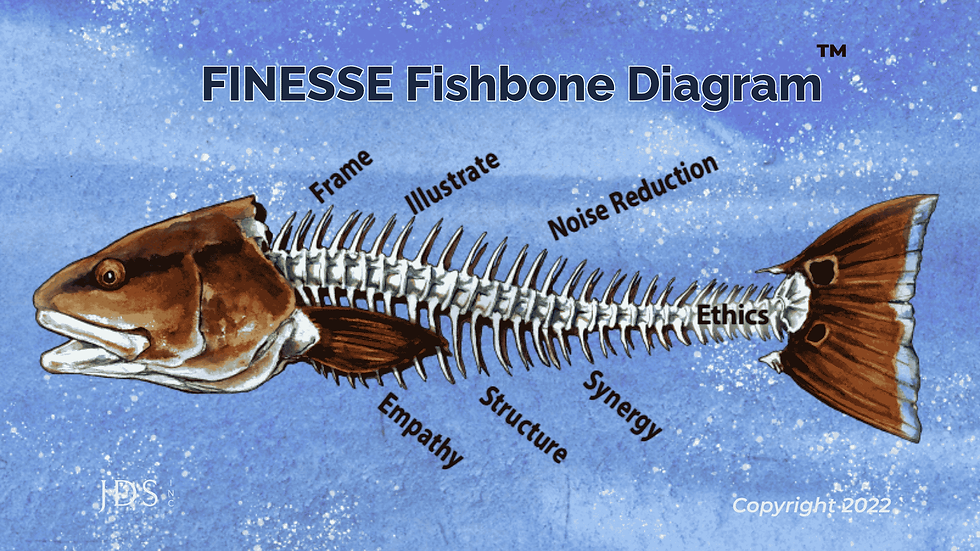
JD Solomon is the founder of JD Solomon, Inc., the creator of the FINESSE Fishbone Diagram®, and the co-creator of the SOAP criticality method©. He is the author of Communicating Reliability, Risk & Resiliency to Decision Makers: How to Get Your Boss’s Boss to Understand and Facilitating with FINESSE: A Guide to Successful Business Solutions.


Comments